
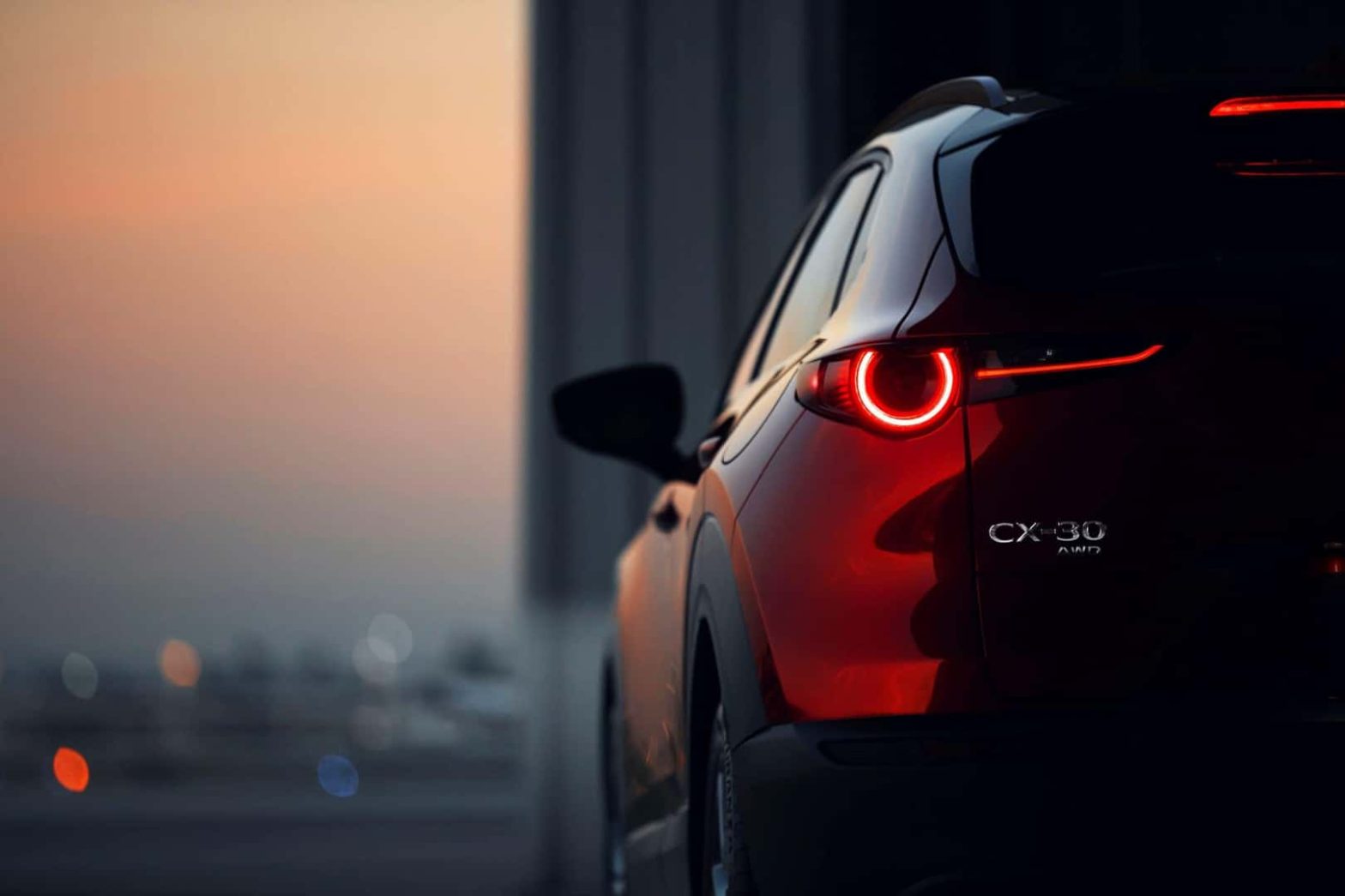
The Next-Generation Mazda CX-30 Redesign: What To Expect
Mazda’s two-row crossover and SUV lineup is getting a major makeover. With the reimagined CX-5 growing noticeably larger than before, there’s a strategic opportunity for the next-generation Mazda CX-30 redesign. Based on the trajectory of Mazda’s recent product strategy, the all-new CX-30, expected by 2029, should significantly expand in size and substance, claiming more real estate in the market. Here’s what to expect when the next-gen CX-30 lands at a Mazda showroom near you.
A Size Gap That Needs Filling
The current CX-30 has always walked an interesting line. It’s positioned as Mazda’s entry-level crossover, but it’s arguably more cramped than the standard Mazda3 hatchback. If you park them next to each other, the difference is striking. The CX-30 offers only marginally more cargo room. That’s not necessarily a criticism of the current car’s design, but it does highlight how the segment has evolved.
Now that the CX-5 has grown into a more sizable compact SUV, there’s a noticeable void opening up in Mazda’s lineup. The new CX-5 is substantially larger than its predecessor, pushing upmarket in both size and price. The result leaves a gap between the subcompact CX-30 and the now more generous CX-5 (or its similarly compact SUV sibling, the rugged CX-50). That’s exactly where the anticipated 2029 Mazda CX-30 redesign comes in.
More Space Is the Answer
For the all-new, redesigned CX-30, expect Mazda to make a deliberate move toward more interior space without fundamentally changing the vehicle’s character and driving dynamics. A moderate increase in wheelbase and length would be the primary tool here, allowing engineers to stretch the cabin in ways that genuinely matter to owners. We’re talking about expanded rear legroom that doesn’t feel compromised and a cargo area that can swallow a proper weekend’s worth of gear.
This expansion wouldn’t turn the redesigned Mazda CX-30 into another one of the brand’s current compact SUVs. Instead, it would elevate it to a slightly larger crossover that makes better sense for families or anyone who regularly carries passengers or cargo. Think of it as a more practical answer to the current generation, encroaching on the size of the first-generation Mazda CX-5.
For reference, the original CX-5 – spanning from the 2013 to 2016.5 model years – measures 179.3 inches in total length. It features up to 103.8 cubic feet of passenger volume, 34.1 cubic feet of cargo space behind its second row, and 65.4 cubic feet of maximum cargo capacity with its 40/20/40 split-fold rear seating lowered.
In comparison, the first-generation CX-30 is 6.3 inches shorter (at 173 inches long), with up to 94.1 cubic feet of passenger volume and 20.2 cubic feet of cargo space behind the second row. Cargo capacity reaches 45.2 cubic feet with folded rear seating.
So, perhaps the redesigned CX-30 will nearly reach the first-gen CX-5 size, which is still substantially smaller than both the CX-50 and the latest CX-5.
A Mazda3 hatchback comparison is also useful here. The reimagined CX-30 should offer cargo versatility that justifies choosing a crossover over a hatchback, not just a minor step up in ride height and hauling capacity. If Mazda gets this right, the CX-30 redesign will be a genuinely compelling option rather than a compromise choice. The increase in interior volume could be the most significant improvement in the vehicle’s redesign.
Powertrains: Evolution Over Revolution
Mechanically, Mazda’s powertrain direction is becoming clearer. The third-generation CX-5 carries forward the familiar 2.5-liter Skyactiv engine, which makes sense. It’s proven, efficient enough for this class, and delivers the kind of driving engagement Mazda buyers expect. That engine will almost certainly carry over to the reimagined CX-30 as the base powertrain.
The more significant addition will be the first-ever Mazda CX-30 Hybrid, featuring a new Mazda-developed hybrid system making its debut in the redesigned CX-5. This is a big deal because it represents Mazda’s homegrown electrification strategy rather than relying on shared platforms from its current corporate partner, Toyota. The CX-30 Hybrid option will likely appeal to buyers who want better fuel economy without going fully electric, which is smart positioning given where the market currently stands.
The first-ever Mazda CX-30 Hybrid represents a calculated move by the automaker to address growing consumer interest in electrified drivetrains. The CX-30 Hybrid should deliver meaningful efficiency gains while maintaining the driving dynamics that set Mazda apart in the segment.
Don’t expect dramatic power increases or turbocharged variants. Mazda has consistently prioritized refined, efficient driving experiences over raw horsepower. That philosophy should remain intact with the all-new CX-30.
The Strategic CX-30 Redesign
What makes the timing interesting is how Mazda has orchestrated its recent redesigns. The CX-5’s evolution created space in the market for the next-generation Mazda CX-30 to move up slightly without cannibalizing sales or creating redundancy.
The CX-30 redesign will carry Mazda’s current design language forward, which has proven both elegant and functional. Expect subtle evolution rather than dramatic departure. The brand’s signature grille, clean lines, and attention to proportion should all carry forward, just applied to a slightly larger canvas. The next-gen CX-30 should feel like a natural evolution of the current design rather than a complete reimagining.
Infotainment: Learning From the CX-5?
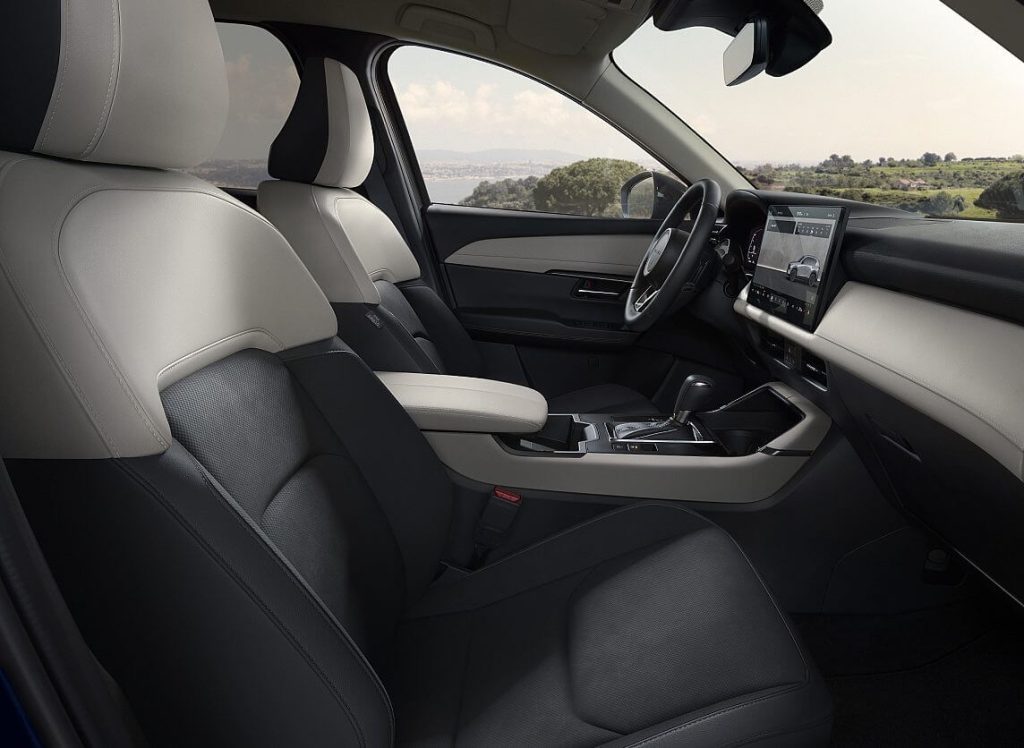
One of the most scrutinized changes on the new CX-5 interior was Mazda’s complete pivot to an all-touchscreen infotainment interface. The automaker ditched its commander control knob, a feature that had become something of a trademark in its vehicles and beloved by the Mazda faithful. The shift generated considerable feedback from both owners and automotive journalists, many of whom felt that the all-touchscreen approach was an overcorrection and represented a step backward in terms of usability and driving safety.
For the all-new CX-30, Mazda has an opportunity to reconsider this direction based on real-world feedback. There’s growing sentiment among Mazda enthusiasts that the CX-5’s purely touchscreen setup went too far, especially for frequently accessed functions like climate control and audio adjustments. Some automotive outlets and safety-advocating organizations have argued that physical buttons and knobs shouldn’t be eliminated entirely, even in an era of digital interfaces.
The redesigned Mazda CX-30 could potentially break from the new CX-5’s approach and reintroduce a more balanced control layout. Picture an infotainment system that blends touchscreen functionality with dedicated physical controls for HVAC settings, volume, and tuning. This best-of-both-worlds approach would maintain Mazda’s distinct identity while addressing one of the primary complaints about modern vehicle interiors.
If Mazda chooses to bring back more tactile controls on the next-generation CX-30 redesign, it would be a calculated decision to differentiate the model and respond to owner sentiment. The brand could once again position the CX-30 as the more driver-friendly alternative within the small SUV segment, offering intuitive physical controls that don’t require taking your eyes off the road as frequently. It’s the kind of practical thinking that has historically set Mazda apart.
Redesigned Mazda CX-30 Release Date
The question of when the all-new CX-30 will actually arrive has two likely scenarios. The most probable timeline points to a 2029 model year debut, partly because Mazda has yet to even discuss and preview the new model publicly. However, there’s a possibility that Mazda could accelerate the timeline and introduce the CX-30 redesign as a 2028 model, which would follow the arrival of the first-ever CX-5 Hybrid the year prior.
Sources familiar with the matter say a 2029 Mazda CX-30 redesign is the expected scenario. A 2029 launch would give Mazda additional development time to perfect the larger interior package and potentially learn from any early feedback on the new CX-5’s all-touchscreen interface – as well as the rollout of the new hybrid powertrain in that model before releasing it in the next-gen CX-30.
Since the CX-30 is heavily based on the Mazda3 compact car – another aging model in the brand’s portfolio – both may be scheduled for a redesign around the same time. We look forward to the second-generation CX-30 and the fifth-gen Mazda3 debuts and will have news and details as they become available. Unfortunately, unlike with the CX-30, Mazda has not confirmed whether there will be a new Mazda3 once production of the current car comes to an end.
Looking Ahead to the CX-30 Redesign
For CX-30 buyers considering the 2029 Mazda CX-30 redesign, patience will likely pay off. The current generation remains competent and attractive, but the next-generation CX-30 should address many of the legitimate criticisms about interior space and practicality. By growing strategically and introducing the first-ever CX-30 Hybrid, Mazda can position the all-new CX-30 as a more complete package that satisfies both practical concerns and the driving experience the brand is known for.
The small crossover segment continues to be one of the most competitive in the automotive market. But if Mazda executes this redesign thoughtfully, the redesigned CX-30 could become one of the more sensible choices in the class, offering the space and efficiency that today’s buyers are actively seeking.
Stay tuned to MazdaMotoring for updates on the upcoming CX-30 and CX-30 Hybrid, as well as their compact car stablemate, the redesigned Mazda3.
Join Our Newsletter
Never miss a Mazda when you sign up for our email list: